
Watching your real estate listings get buried on Google especially when property taxes are rising or prices are shifting—is incredibly frustrating. Buyers are out there searching, but they just can’t find you.
This gap between your properties and potential clients is where strategic SEO comes in.
Even in uncertain markets, people search actively for information and opportunities. By optimizing your online presence for these motivated searchers, you can turn market changes into a competitive advantage. Let’s explore how to make your website a reliable resource that attracts ready-to-act clients.
How SEO Helps You Connect with Cautious Buyers
When taxes rise or housing prices fluctuate, buyer behavior changes. They don’t just search “homes for sale”; they ask questions like:
When buyers become cautious because of taxes or housing uncertainty, ranking higher becomes less about listings and more about trust. This is where a strong real estate SEO strateg focused on tax and housing challenges helps you appear in front of motivated buyers at the right time.
- “How much is property tax in Springfield?”
- “Affordable neighborhoods near Dallas after appraisal increase”
Your SEO strategy should directly target these hyper-local, high-intent queries.
Create Content That Answers Buyer Questions
- Compare property tax rates across local subdivisions.
- Guide first-time buyers during economic shifts.
- Provide tips to navigate changing interest rates.
Example: A blog post addressing Austin tax reappraisal helped a local agent rank in Google’s top results, generating 50+ qualified leads within three months.
ricing confusion is another major concern for buyers during unstable markets. Learning how to apply profitable real estate pricing strategies in the USA can help agents attract serious buyers while protecting margins.
Actionable Step: Build 3–5 city-specific pages addressing current issues, like “Springfield Neighborhood Guide After 2024 Tax Hike”.
Key Takeaways:
- Target city-specific search terms combined with market issues.
- Provide detailed answers to common buyer concerns.
- Position yourself as a local market expert to earn trust before initial contact.
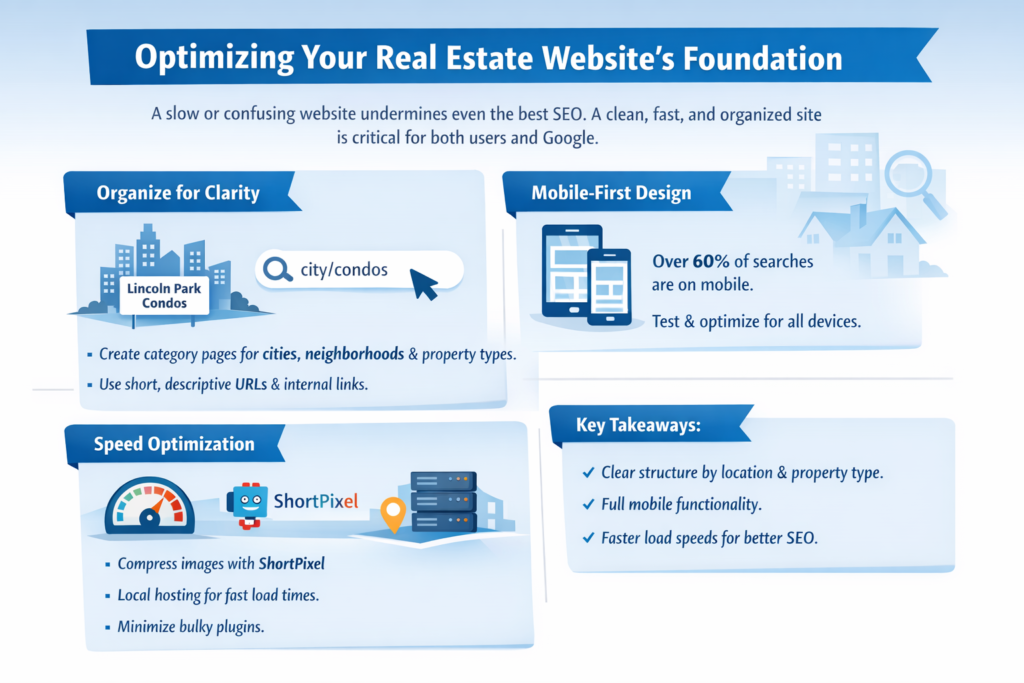
Optimizing Your Real Estate Website’s Foundation
A slow or confusing website undermines even the best SEO. A clean, fast, and organized site is critical for both users and Google.
Organize for Clarity
- Create category pages for cities, neighborhoods, and property types (e.g., “Lincoln Park Condos”).
- Use short, descriptive URLs and internal links to connect related pages.
Mobile-First Design
- Over 60% of real estate searches happen on mobile.
- Use responsive design and test pages on various devices.
Speed Optimization
- Compress images using tools like ShortPixel.
- Use hosting with local servers in your city for faster load times.
- Minimize bulky plugins and code.
Key Takeaways:
- Structure your site clearly by location and property type.
- Ensure full mobile functionality.
- Improve load times for better user experience and search rankings.
Winning Your Local Market with SEO
Local SEO is the backbone of real estate marketing. Your goal: appear for searches like “homes for sale near me in Frisco” or “best school districts in San Antonio.”
Google Business Profile Optimization
- Claim and complete your profile.
- Add photos, service areas, and accurate contact info.
- Post updates about listings or local market insights.
- Encourage client reviews for social proof.
Local Keyword Integration
- Build neighborhood-specific pages with detailed amenities, trends, and listings.
- Use city-specific terms to improve local rankings.
To dominate searches like “homes for sale near me,” agents must go beyond basics. A complete approach to mastering local SEO for real estate businesses ensures stronger map rankings, better visibility, and higher-quality leads.
Leverage Maps and Hyper-Local Content
- Embed Google Maps on “About” or contact pages.
- Create reports like “2024 Market Report for The Woodlands”.
- Implement FAQ schema for better SERP visibility.
Key Takeaways:
- Fully optimize your Google Business Profile.
- Create neighborhood-focused, keyword-rich content.
- Use maps and structured data to stand out locally.
Creating Content That Builds Trust in Any Market
Uncertainty generates questions. Your content must inform and guide.
Helpful Content Formats
- Neighborhood Guides: Schools, parks, commute times, local market stats.
- Explainer Articles: “Understanding Property Tax Appeals,” “How Interest Rates Affect Buying Power.”
- Market Updates: Short posts or videos on inventory and pricing trends.
Address Local FAQs
- “What’s the average property tax rate in Bexar County?”
- “Is now a good time to sell my home in Dallas?”
Refresh Existing Content
- Update statistics, prices, and community details.
- Example: A SEOagency1 client saw a 35% traffic increase by refreshing a neighborhood page.
Key Takeaways:
- Use educational formats to help wary buyers.
- Proactively answer local questions.
- Refresh old content to maintain ranking and relevance.
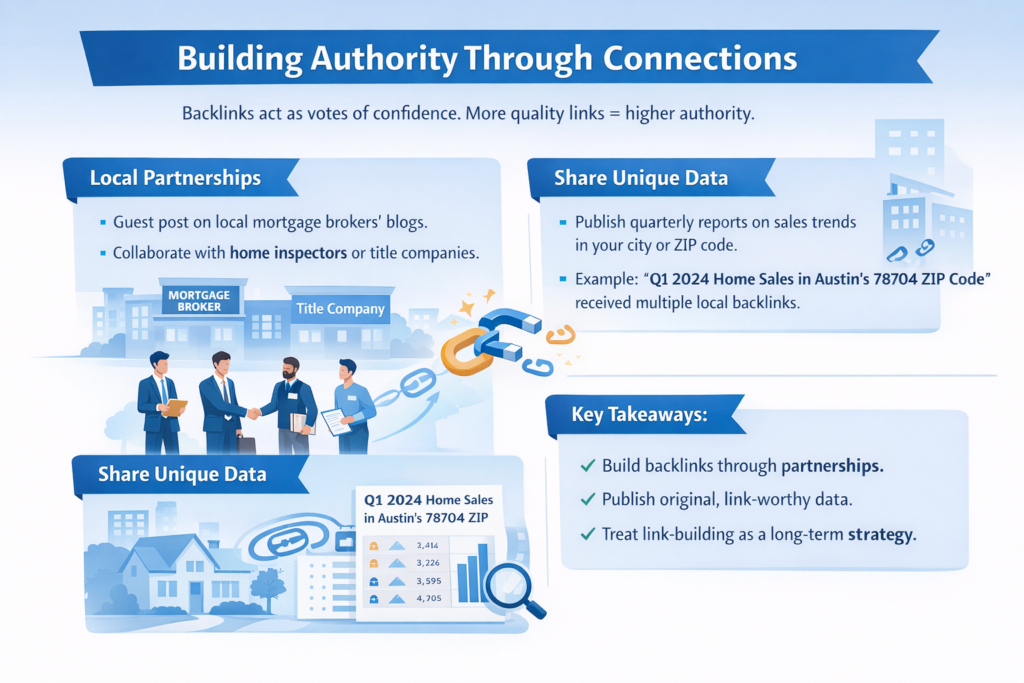
Building Authority Through Connections
Backlinks act as votes of confidence. More quality links = higher authority.
Local Partnerships
- Guest post on local mortgage brokers’ blogs.
- Collaborate with home inspectors or title companies.
Share Unique Data
- Publish quarterly reports on sales trends in your city or ZIP code.
- Example: “Q1 2024 Home Sales in Austin’s 78704 ZIP Code” received multiple local backlinks.
Key Takeaways:
- Build backlinks through partnerships.
- Publish original, link-worthy data.
- Treat link-building as a long-term strategy.
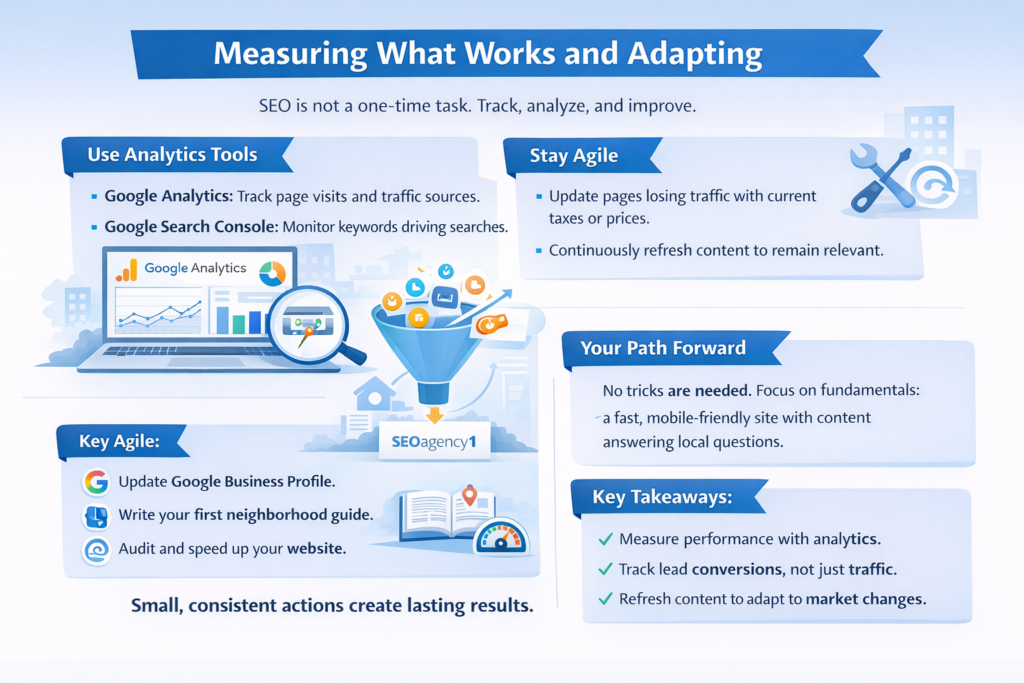
Measuring What Works and Adapting
SEO is not a one-time task. Track, analyze, and improve.
Use Analytics Tools
- Google Analytics: Track page visits and traffic sources.
- Google Search Console: Monitor keywords driving searches.
Focus on Leads
- Track contact form submissions, calls, and listing clicks.
- SEOagency1 sets conversion goals to separate window-shoppers from serious inquiries.
Stay Agile
- Update pages losing traffic with current taxes or prices.
- Continuously refresh content to remain relevant.
Key Takeaways:
- Measure performance with analytics.
- Track lead conversions, not just traffic.
- Refresh content to adapt to market changes.
Your Path Forward
No tricks are needed. Focus on fundamentals: a fast, mobile-friendly site with content answering local questions.
Action Steps This Week:
- Update Google Business Profile.
- Write your first neighborhood guide.
- Audit and speed up your website.
Key Takeaways:
Focus on visibility and trust to convert searchers into clients.
H3: What is real estate SEO and why is it important?
Small, consistent actions create lasting results.
SEO optimizes your website to rank higher on Google. Buyers searching “homes for sale near me” or “best neighborhoods in [City]” see your listings first.
How does SEO help during changing markets?
When taxes or prices fluctuate, buyers search for specifics. SEO helps you answer these questions, building trust and generating qualified leads.
Which keywords are most effective?
Use hyper-local, high-intent keywords:
- “Dallas homes under $500k”
- “Austin first-time buyer programs”
Is website speed and mobile-friendliness important?
Yes. Over 60% of searches are mobile. Slow sites lose leads and rankings.
How does local SEO work?
Optimize Google Business Profile, create neighborhood pages, embed maps, and use local keywords to show up in “near me” searches.
What type of content should I create?
- Neighborhood Guides: Schools, parks, commute times
- Explainer Articles: Taxes, interest rates, buying tips
- Market Updates: Inventory, pricing trends
Should I update old blogs or listings?
Yes. Refresh prices, taxes, and community developments to keep pages relevant.
How do backlinks impact SEO?
Backlinks are votes of confidence. Local partnerships and guest posts increase authority and rankings.
What’s the difference between traffic and leads?
Traffic = visitors. Leads = people contacting you. SEO should focus on generating quality leads.
How should I adjust SEO during market shifts?
Update pages with current tax or price info, track performance with Google Analytics/Search Console, and refresh content to remain relevant.
Meta Suggestions for SERP Optimization
Meta Description: Learn how Dallas & Austin realtors can use SEO to generate leads during changing markets. Build trust, optimize locally, and convert searches into clients.
If managing SEO during market shifts feels overwhelming, working with a team that offers professional SEO services across the USA can help you stay visible, generate leads, and grow consistently—regardless of market conditions.
Anchor Keywords Used:
Conclusion
Real estate SEO can turn market changes into an opportunity. By using hyper-local keywords, maintaining a mobile-friendly website, updating content regularly, and building trusted backlinks, you can attract more qualified buyers and strengthen your authority.
For expert guidance and proven results, consider AID services, which specialize in real estate SEO for Texas and other markets.